Most of us are familiar with the word leukemia and are aware that it is some sort of a cancer that affects people. It is also a fairly well-known fact that leukemia is a serious condition that can be fatal. There are many different types of leukemia, which can affect not just humans, but also …
Saturday, September 28, 2013

HERBS AND SPICES FOR YOUR DOG"S HEALTH

Humans have used herbs and spices to add flavour to their food and to treat ailments for thousands of years.So, it should not be surprising that there are many herbs and spices that are good for dogs. Holistic medicine for dogs includes the use of herbs and spices to treat and ameliorate ailments and diseases.Â
Herbs and spices can also be added to your dog’s food as part of a healthy diet. One of your dog’s best defenses against ailments and diseases is healthy immune system. A healthy diet supports a healthy immune system. Whole raw foods can be an excellent addition to your dog’s daily diet – fruits and vegetables, fatty fish, eggs, yogurt, herbs and spices. In addition to the health benefits, dogs do like the taste of many herbs and spices.Â
Herbs and spices should not be indiscriminately given to dogs. Some herbs and spices are very powerful and can have side affects will others are mild and less likely to cause issues. Before you decide to give a herb or spice to your dog make sure you know its use, side affects, toxicity (if any) and safe dosage.Â
My dogs eat the following herbs and spices…Aloe Vera, Basil, Caraway Seeds, Flax Seed, Fennel Seeds, Garlic, Rooibos Tea or Green Tea (decaffeinated), Parsley, Rosemary, Turmeric and Ginger. These herbs are all non-toxic and beneficial for dogs, but like any other food stuff should always be provided in a safe amount. You can refer to the dosage chart at the bottom of this article. While these herbs are non-toxic, they can interfere with conventional western medicines – this is discussed further below. These herbs are safe for pregnant and nursing dogs.
Here is a little information on the benefits of each of these herbs/spices…
Aloe Veracontains amino acids, folate, iron, magnesium, phosphorous, potassium, zinc, vitamin A, C and E. It has anti-bacterial, anti-inflammatory and anti-allergy agents and is an anti-oxidant. 100% pure Aloe Vera juice can also be taken internally to boost the immune system, help reduce the symptoms of allergies and to help the healing of wounds. Aloe Vera gel can be used topically to help wounds heal – 100% Aloe Vera Gel is best. Daily dosages for my dogs are as follows ½ tbs for my 4lb dog, 1tbs for my 8 lb to 25 lb dogs and, 2 tbs for my larger dogs 30 to 70 lbs.

Basil is rich in essential vitamins, minerals, phyto-nutrients, electrolytes and oils that are essential for optimal health. Basil is an anti-inflammatory, anti-bacterial and anti-oxidant. Basil is well known for its multiple disease preventing and health promoting properties. You can use fresh basil or dry basil.

Caraway Seedsare rich in dietary fibre, vital vitamins, and minerals, anti-oxidants (cancer and disease fighting). Caraway seeds are considered a warming herb – meaning they help the body stay warm. Caraway seeds are also good for muscle health (anti-contraction).

Cinnamon (Ceylon Cinnamon) is an anti-oxidant, anti-inflammatory, anti-diabetic, anti-septic, warming and soothing, calming, carminative (anti-flatulent). Cinnamon is said to have one of the highest anti-oxidant levels of all food sources. Cinnamon can help remove the alfatoxins present in foods. Cinnamon is also good for keeping teeth clean and fighting bad breath. I use the powder form ( ground cinnamon).
 
Flax Seeds are rich in omega-3 and fatty acids, anti-oxidants, nutrients, minerals and vitamins that are essential for optimal health. Flax seeds also help pass toxins out of the body. There are two types of flax seeds – brown and yellow (golden), both are similar in nutritional value. Daily dosage should be in the range of:
1/2 tsp for tea cup dogs 2 to 4 lbs;
1 tsp for toy dogs 5 to 15 lbs;
1 tbs for small dogs 16 to 25 lbs;
1.5 tbs for medium-small dogs 26 to 39 lbs
2 tbs for medium-large size dogs 40 to 70 lbs
2.5 tbs for large dogs 71 lbs to 90 lbsÂ
3 tbs for x-large dogs 91+ pounds
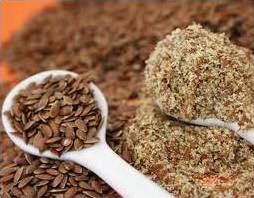
Fennel Seeds are rich in dietary fibre, anti-oxidant, anti-inflammatory, rich in vitamins, minerals. They also help protect the body from infection, disease and caner. Fennel seeds are good for the urinary tract. They also help in the absorption of food stuff – thereby helping to keep your dog’s teeth clean and helping with digestion.

Garlic You may have heard that garlic is bad for dogs. Well, garlic has been used for many years by holistic veterinarians. The confusion about whether garlic is good or bad seems to have arisen from confusion with its close cousin, the onion. Both garlic and onion contain thiosulphate, the substance responsible for causing ‘Heinx Factor’ anemia in dogs. However the amount of thiosulphate found in garlic is much lower than in onions, in fact the amount in garlic is barely traceable!  The fear of garlic is a new one – propagated by rumor on the internet and not proven by any facts or study. For an extensive list of foods that dogs should not eat you can click here.
When garlic is ingested in reasonable amounts there are no harmful affects, but there are plenty of beneficial qualities…
- Garlic contains germanium – an anti-cancer agent;
- Garlic helps to regulate blood pressure;
- Helps strengthen the body’s defences against allergies;
- Helps regulate blood sugar levels;Â
- Garlic is high in vitamins, minerals and nutrients:
- Calcium, Potassium, Zinc;
- Protein;
- Vitamin A, B, B2, C;
- Garlic is an aid to fighting and treating:
- Diabetes;Â
- Liver, heart and kidney disease;
- Garlic is a natural flea repellent and de-wormer.
Please do not add garlic in a mixed form to your dogs diet (i.e. garlic steak spice – this is not pure garlic and can make your dog very ill). When I refer to garlic I am talking about garlic in its pure form – garlic cloves. A safe dosage for garlic is 1 clove/30lbs of body weight per day. I use finely chopped fresh garlic, you can also use dried, ground garlic. You can read more about garlic here.

Ginger is an anti-coagulant, anti-inflammatory, anti-bacterial, carminative. Ginger also Ginger helps in the absorption of food stuff – thereby helping to keep your dog’s teeth clean and helping with digestion. Ginger also helps in treating nausea such as motion sickness. Ginger helps boost healthy blood circulation, so it is very helpful for a dog that is prone to vascular damage of the extremities. My Boxer, Robbie has very short fur and is particularly susceptible to vascular damage (i.e. frost bite of the extremities, including ears). In the winter I add about 1 tbs of finely chopped ginger root to his daily salad.  You can also use dry, ground ginger.

Green Teais rich in anti-oxidants and is helpful in fighting some cancers. It is also calming. Make sure you use de-cafinated Green Tea.

Rooibos Tea (Red Bush Tea) is naturally anti-viral, anti-allergenic and a mild anti-anxiety mediator. Rooibos tea is also high in vitamin C, rich in antioxidants (37 to be exact), several minerals and alpha-hydroxy-acid. To give your dog’s immune system a boost you can also add rooibos tea to your dog’s drinking water or food. Rooibos is naturally caffeine free and low in tannin. The USDA has confirmed that rooibos tea is capable of reducing cancer, heart disease and other illness. It is also excellent for dogs with chronic skin allergies. If your dog suffers from anxiety it can help to relax and de-stress your dog. The only caution – if your dog is suffering from iron deficiency do not give him/her rooibos as it slows down the absorption of iron. You can read more about Rooibos Tea here.

I add the juice of one fresh lemon to a freshly steeped pot of green tea or rooibos tea and pour the resulting tea into a large bottle that I store in the refrigerator. Once a day I add the tea to each of my dogs’ meals.
Parsley is high in fiber, rich in anti-oxidants, vitamins and minerals which help fight cancer and enhance the functioning of all organs. It also helps the body pass toxins and fights bad breath. Fresh Parsley is best but you can also use dry parsley.

Rosemary is high in fiber, rich in vitamins, anti-oxidant, anti-inflammatory, anti-allergic, anti fungal, anti-septic, disease preventing and health promoting properties. You can use fresh or dry rosemary.Â

Turmeric is high in fiber, anti-inflammatory, anti-microbial, rich in vitamins and minerals and offers protection against anemia, arthritis, cancer, stroke (cardiovascular health), neuritis, memory disorders. You can use powder (most commonly available), crushed or fresh root. I use the powder form (ground turmeric).

If your dog is overweight you might want to try adding either turmeric or curcumin to his/her daily diet…new research by the United States Department of Agriculture (USDA) has confirmed that curcumin helps to speed up metabolism…

Curcumin is the most active curcuminoid found in turmeric, and provides turmeric with:
Its bright yellow colour. Curcumin is well known for its…
- Anti-inflammatory properties;
- beneficial for traumatic from accidents and trauma as it helps lower serum levels which would otherwise cause massive inflammation leading to the shut down of the heart and other organs;
- beneficial in the fight against rheumatoid arthritis. Â
Cancer fighting properties:- Inhibition, and;
- Treatment;
- Cardiovascular health properties, and;
- As mentioned above – metabolism boosting properties.
Like turmeric, curcumin is safe for dogs. If you would like to learn more about the health benefits of Curcumin and Turmeric for you dog you can read this article.
Introducing Herbs to Your Dog’s Diet
My dogs have ever had an allergic reaction to the herbs or spices that I give them, but just like with any other food stuff, some dogs may react to a herb or spice when other dogs will not. I always recommend that if you are going to introduce a new food stuff to your dog, introduce only one new item at a time. Wait a few days before introducing the next new item. Allergic reactions can range from runny eyes and nose, sneezing, itching, swelling, diarrhea or vomiting.
How to Incorporate Herbs and Spices Into Your Dog’s Diet
You can make your own dog food that incorporates herbs and spices. If you would like to try a recipe you can take a look at these Homemade Dog Food Recipes (grain free and wholesome grain options) or these Homemade Dog Treat Recipes that I developed for the health of my dogs. These recipes incorporate many of the herbs and spices noted above.
You can sprinkle the herbs and spices over top of your dog’s food and then drizzle with coconut oil and/or olive or sweet almond oil - I do this with my dogs’ fresh food.
When Should Herbs & Spices Not be Introduced to Your Dog’s Diet
While certain herbs and spices do not create a hazard by themselves they can interfere with the conventional medicines. If your dog is on any of conventional medicines please make sure you consult your veterinarian before you introduce herbs or spices to your dog’s diet. The following provides a list of some of the medicines that some herbs may interfere with…
Anti-inflammatory (i.e. Rimadyl) - please note – turmeric and curcumin will not degrade the effects of glucosamine, chondrotin or MSN, and therefore can be used with turmeric and curcumin
Aspirin
Antibiotics
Cardiac drugs
Central Nervous System drugs
Chemotherapy drugs
Diabetic / Hypoglycemic drugs (i.e. Insulin)
Diuretics (i.e. Furosemide, Diazide)
Hormones (i.e. Thyroxine)
Steroids
To See a More Comprehensive List of Herbs
- That are good for your dog;
- That are dangerous for your dog;
- Many beneficial uses of herbs;
Daily Herbal Intake Based on Dog’s Weight
The table below provides a general guideline for herbs/spices based on your dog’s weight. The information provided in the table is an extract from Dr. Kidd’s Guide to Herbal Dogs Care.
Â
Dog’s Weight | Sprinkles (on dog’s food once/day) | Teas | Capsules/Tablets | Tinctures |
1-10 lbs | a small pinch | less than 1/4 cup, 1-3 times/day | 1/2 capsule, 1-3 times/day | 1-3 drops, 2-3 times/day |
10-20 lbs | a bigger pinch about | 1/4 cup, 1-3 times/day | 1/2-1 capsule/tablet, 1-3 times/day | 3-5 drops, 2-3 times/day |
20-50 lbs | 2 pinches-1 teaspoon | 1/4-1/2 cup, 1-3 times/day | 1-2 capsules/tablets, 2-3 times/day | 5-10 drops, 2-3 times/day |
50-100 lbs 10- | 2 pinches-2 teaspoons | 1/2-1 cup, 1-3 times/day | 1-2 capsules/tablets, 3-4 times/day | 20 drops, 2-3 times/day |
Over 100 lbs, | up to 1 tablespoon | up to 1 cup 3 times/day | adult human dose | adult human dose |
â€áµ”ᴥᵔâ€
Related Articles
For related and additional articles on dog and cat, care, health, training, nutrition and animal advocacy go to thispage.
Feel free to leave a comment below – if your comment is polite, informative etc. I will publish it. If your comment is a quick question, I will answer it if time permits…
If you require additional assistancewith your dogs you can engage me to…
1.0) Do an in-person session(see details below)
2.0)Â Do a phone/email consultation (see details below)
1.0) In-Person Sessions are available to you if you live in the region of Ottawa-Gatineau, the Ottawa Valley and Region.
(i.e. Ottawa, Hull, Alymer, Orleans, Bells Corners, Manotick, Vars, Kanata, Stittsville, Smith Falls, Fitzroy, Carp, Arnprior, Renfrew, etc.)Â
 and surrounding areasÂ
(i.e. Brockville, Smith Falls, Perth, Kingston, L’Original, Val-des-Monte, St-Pierre-de-Wakefield, etc.)
or if you will be visiting the area from out-of-town.
Methods of Payment (for In-Person Sessions):
Cash, Email Money Transfer and Credit Card via PayPal
2.0) If you reside elsewhere you can engage my world wide consultation service, details of which are provided just below…
My Hourly Fee
$ 100.00/hour in Canadian funds.
Purchasing Consultation Time:
Client’s often start out by purchasing an hour of my time and then augment that if required to suit the situation;
Or you can – if your situation requires it, purchase whatever block of time you want (i.e. multiple hours).
Methods of Payment:
Email Money Transfer and Credit Card via PayPal
1.0 Email Money Transfer:
1 hour = $ 100.00 in Canadian Funds;
For payment via email money transfer I provide you with a password (security information).
2.0 Credit Card via PayPal
1 hour = $ 100.00 + $ 5.00 PayPal Transaction fee = $ 105.00 Canadian Funds;
For payment via PayPal I send you a PayPal invoice to enable payment.
Method of Consultation – Canada, USA and Abroad (i.e. UK, Asia, etc.)
If You Are Located In:
1.0 Canada:
I can work with you via:
Phone with follow-up by email, or;
Via email only;
The choice is yours;
If you want to work via phone you provide me with your phone number and I will call you at the mutually agreed upon Consultation time.
2.0 USA:
I can work with you via:
Phone with follow-up by email, or;
Via email only;
The choice is yours;
If you want to work via phone:
You call me at the following number 613-622-7958, at the mutually agreed upon consultation time.
3.0 ALL OTHER GLOBAL LOCATIONS (i.e. UK. Asia, etc.):
I can work with you via:
Via email only, or;
Phone with follow-up by email…
The choice is yours;
If you want to work via phone:
You call me at the following number 613-622-7958, at the mutually agreed upon consultation time.
To Set-up a Consultation
Step 1 – Identify how you would prefer to pay for the consultation;
 Payment options as noted above are:
o   email money transfer, or;
o   Credit card via Paypal.
Step 2 – Identification of a consultation time that works for both our schedules;
Step 3 – You then pay the fee for the amount of consultation time you want to purchase;
Step 4 – Consultation takes place on the agreed upon time.
Contact me at
Office 613-622-7958
Cell 613-293-3707
Cell 613-293-3707
Ottawa Valley Dog Whisperer Services
Training;
Behaviour Modification;
Rehabilitation;
Nutrition;
Health
Whether you are experiencing dog behavior problems and would like assistance, or just want to bring your dog up to be a well-balanced canine -Â I offer both a local and international service for people with one or multiple dogs.Â
I work with all breeds – from small (i.e. Yorkie, Pomeranian, Chihuahua, etc.), medium breeds size (including Pit Bulls) and large breed dogs…
In-person SessionsDog Training, Puppy Training, Behaviour Modification, Rehabilitation, Diet, Nutrition and Care – Ottawa, Ottawa Area, Outaouais, Ottawa Valley
International e-ConsultationÂ
Contact me at
Office 613-622-7958
Cell 613-293-3707
Cell 613-293-3707
Ultimate Guide to Dog Health
Every dog owner knows that he or she has to annually budget for vet bills. And that can get really expensive lately. Especially in the economic times we live in, it is essencial that we do whatever we can to keep those costs to a minimum.
Here’s how to quickly and easily benefit from 35 proven ways to keep your dog healthy. This eBook is 44 pages with 35 proven tips on every topic regarding dogs’ health. It also includes 4 bonuses, and has a 30 days money back guarantee.

Dog Cartoon Of The Week: Left-Unders

***
Dog Cartoon of the Week is brought to you by Andertoons. Check out the website for more great cartoons.
Cartoonist Mark Anderson lives in the Chicago area with his wife, their children, two cats, a dog and several dust bunnies. You might have seen his cartoons in a number of publications including Reader’s Digest, The Wall Street Journal, Good Housekeeping, Forbes, Barrons, Woman’s World, Harvard Business Review, Saturday Evening Post, American Legion Magazine, Funny Times.
Dog Food: Healthy Powder Supplement
This supplement recipe is from Dr. Pitcairn’s Complete Guide to Natural Health for Dogs and Cats. The Healthy Powder is used in the Doggie Oats recipe and other recipes developed by Dr. Pitcairn.

Healthy Powder
2 cups nutritional (torula) yeast
1 cup lecithin granules
1/4 cup kelp powder
1/4 cup bonemeal (or 9,000 mg calcium or 5 teaspoons eggshell powder)
1,000 mg vitamin C (ground) or 1/4 teaspoon sodium ascorbate (optional)
Mix all ingredients together in a 1-quart container with lid and refrigerate.
Dog Health Problems Symptoms - How the Internet Can Help
One of the hardest things that pet owners find when they own a dog, is that the dog cannot tell you when it is feeling poorly. True enough there are symptoms that are sometimes very noticeable, like when your dog contracts diarrhea, but sometimes like in the case of liver cancer or spleen cancer, your wonderful little pet simply cannot tell you what is going on. It may be very obvious that he or she does feel very well, they might be listless or even act kind of ferocious, for instance if your pet has come down with canine distemper because he has been staying at a boarding kennel. Its just that many times, the symptoms might not be so apparent. One of the most important things that you can do when you are caring for a dog is to find information online that might be able to help you take care of your pet. Silly as it may sound, your dog cannot find out for himself what is going on with his health. He must rely on you as a caring dog owner to take on the responsibility of providing health care. Its not like pet owners don’t want to take care of their pets, its just that sometimes, they get busy, they start reading the email or playing an online game with their friends and then before you know it, 2 hours have gone by and they have not learned anything new that can help their faithful dog friend who has been laying at their feet while they were online. Now, of course, if your pet has loose bowels and is leaving piles of feces all around the house, this is pretty noticeable and you will start paying attention immediately. But, say for instance, your dog starts to develop the symptoms of cushing’s disease in dogs, would you honestly know what was going on with him. Most people would not and that is why it is a very good thing that we have the internet to help us track down and find information about dog health problems. Of course, this may never happen to you, that your wonderful little pet dog comes down with some sort of sickness that makes him feel bad and breaks your heart, but if that does happen, you know that the internet is full of information and helpful websites so you can find out what you need to help your dog feel better fast.
Bo - The Presidential Dog
 WASHINGTON – Bo? No jest. The first family has settled on a first pet — a 6-month-old Portuguese water dog that the Obama girls are naming Bo.
The selection was one of the White House’s most tightly kept secrets.
President Barack Obama’s daughters, 10-year-old Malia and 7-year-old Sasha, picked a black and white pup, a White House official speaking on the condition of anonymity told The Associated Press Saturday night.
The dog is a gift from Sen. Edward M. Kennedy, D-Mass., who owns several Portuguese water dogs himself.
“We couldnt be happier to see the joy that Bo is bringing to Malia and Sasha,” Kennedy said in a statement. “We love our Portuguese water dogs and know that the girls — and their parents — will love theirs, too.”
The Washington Post reported in its online editions Saturday night that Obama’s daughters chose the name Bo for the pup because first lady Michelle Obama’s father was nicknamed Diddley. The name for the dog was an apparent reference to the singer “Bo” Diddley.
White House aides told the AP that the office of the first lady arranged an exclusive deal on the dog story with the Post. The officials, who demanded anonymity because of the deal with the Post on exclusive details, said the dog was not in the White House as of Saturday evening.
Throughout the day Saturday, celebrity Web sites and bloggers were abuzz with rumors of the first family’s selection of a Portuguese water dog; one site even claimed it had pictures of the future first pet.
The president had embraced the frenzy: “Oh, man, now, that’s top secret,” Obama joked Friday to reporters.
Obama promised his daughters a puppy during the campaign.
“This is Washington. That was a campaign promise,” Obama said when he appeared on Jay Leno’s talk show last month, as the audience roared with laughter. “No, I’m teasing. The dog will be there shortly.”
The president and first lady had said their choice was down to either a Portuguese water dog or a Labradoodle because they were considered good pets for children who have allergies, as Malia does.
Article by PHILIP ELLIOTT, Associated Press Writer
Subscribe to:
Posts (Atom)